Journal °3 – Janek Lewczuk
Even though jewellery design is his anchor, building Sote pushed him into a wider set of responsibilities. Though the brand began as a duo, for several years he has been steering everything himself: from day‑to‑day operations and running the boutique at Mokotowska 61 to shaping the visual language that defines the brand.
In this conversation with Janek Lewczuk – co-founder, designer, and creative director of Sote, we explore how he builds a brand shaped by sensitivity, visual clarity, and a deep respect for the stories objects can tell.
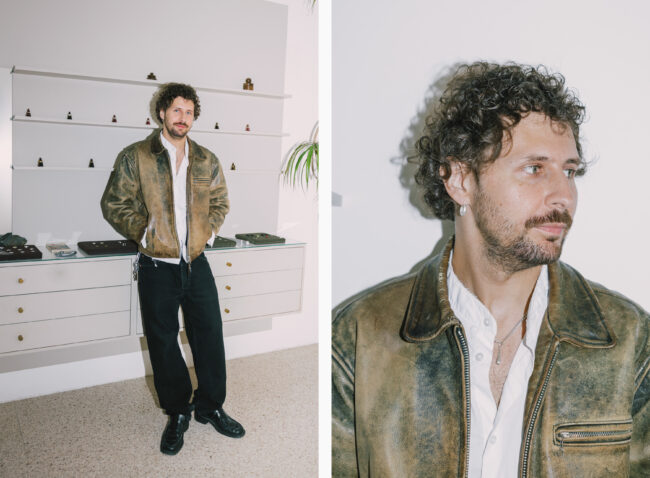
After experimenting with so many forms, did jewellery feel like the place you belonged?
I spent my years at the Academy of Fine Arts in Warsaw convinced I’d be designing furniture. That was the dream: an interdisciplinary studio, big forms, the whole setup. But my hands always gravitated toward the small scale. While everyone else was scaling up, I was obsessed with miniaturization. I never wanted a PlayStation; I wanted a Game Boy, purely because it fit in my pocket and went everywhere with me. Jewellery became the natural endgame of that obsession. It’s the ultimate portable art, with no massive workshop required and complete creative freedom.
Did the brand arrive at exactly the right time for itself?
Definitely. Back then, there wasn’t really an independent jewelry market in Poland, so Sote arrived right on time. It was also a breakthrough moment for Polish fashion in general. Big names like Chylak, Balagan, Elementy, and Le Petit Trou were just starting out. There was so much energy around independent fashion then – it was the start of a new era that hasn’t stopped.
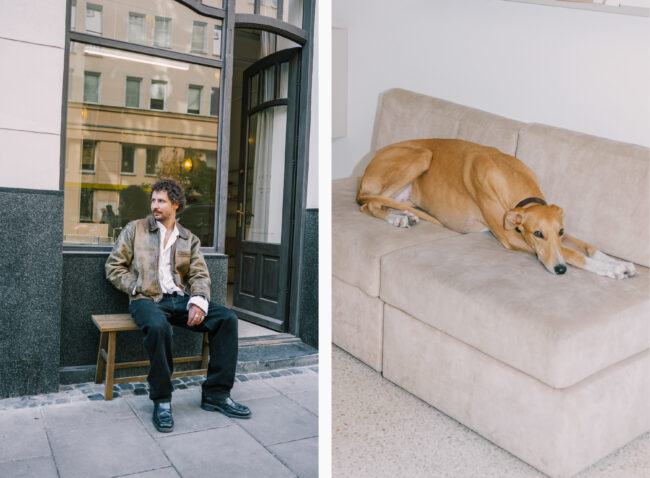
There’s a clear thread connecting everything you’ve made from the start. How do you keep your designs moving forward without breaking that signature Sote look?
From the start, I saw Sote as a brand, not just individual craft. I think in systems, and each new design is an iteration of the previous one, new forms grow directly out of earlier ones. Everything is based on a clear structure where ring thicknesses are categorized and become the foundation for new branches. A great example is the Horizon line, which includes models with identical parameters. This structural consistency makes the pieces naturally complement each other.
Instead of chasing trends I’m building a universe where each new collection is a thoughtful variation on the last, expanding the story we started years ago. I’ve also noticed that Sote ages really well and time only strengthens it.
You’ve recently been designing for other brands as well. Does creating outside your own label give you space for a different kind of creative flow?
It’s nice to step outside the known universe once in a while and see how I think about design when Sote isn’t on my mind. Recently, I’ve been collaborating with MISBHV, and despite coming from different worlds, we still managed to build a bridge. I wanted to bring a touch of elegance and real craftsmanship to the brand, moving it away from just ‘clubwear’ and closer to a high-fashion feel.
Managing Sote’s creative and business worlds is demanding, so I look for outside inspiration. Our upcoming project with Charlotte Taylor is a perfect example. These collaborations keep the brand’s energy fresh and prevent it from becoming one-dimensional.
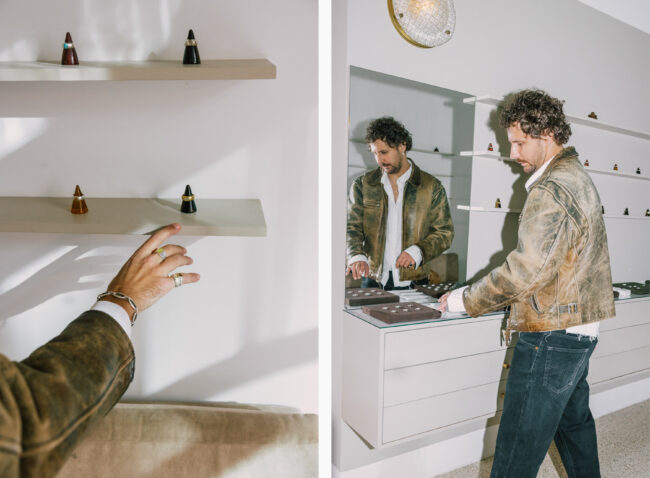
You’re taking Sote global now. Why do you think your designs resonate so well outside of Poland?
Going global has been a dream for years. Warsaw will always be my home, but I eventually needed to step outside local scene. As my designs got bolder and we stuck to using solid precious metals, our prices naturally went up. Surprisingly, that jump actually helped us. What felt expensive in Poland was seen as a ‘yes’ abroad. We found a sweet spot where our quality was high, but the price felt light to an international audience.
The real breakthrough was two years ago in Copenhagen, thanks to a help of my friend, Kasia Sznajder. Instead of trying to ‘conquer the world’ at once, we focused on one city that felt like the international version of Warsaw.
By 2025, things just started to click. Our Instagram took on a life of its own, popping up on the feeds of influencers and editors we’d always admired from afar. It all happened so organically and suddenly, Sote was finding its way to the U.S. and all over Europe.
What perspective has this experience opened up for you?
Most of all, it made me feel more confident. For the U.S. market, it’s amazing to see that our signature pieces are truly appreciated abroad. We also receive many kind, spontaneous messages, clients even send thank‑you notes, which reassures me that our quality speaks for itself, even when people can’t touch the products before buying.
Expanding abroad feels like a big step forward. We’re not just a small Warsaw workshop anymore, we’re turning into an international brand. That motivates me to improve everything we do, from the product to the packaging. I want Sote to hold its own among top global brands.
As you explore new ideas, which details or elements tend to catch your attention first?
It may sound simple, but I’m really inspired by the people around me. Sote grows straight from the heart of this city. I watch my friends – how they dress, what objects they choose, what kind of material culture they create around themselves. They’re my biggest point of reference.
Of course, I follow global fashion, but I try not to spend too much time on classic research. More often, I check what others are doing just to know… what not to design. I don’t want to react to short-lived trends. In a globalized world, the only real way to create something of your own is honesty and locality. That authenticity is what helps us stand out abroad.
A conversation for Sote Journal, led by Paulina Serwatka.
Photography by Asia Typek.